There are affiliate links on this page.
Read our disclosure policy to learn more.
Translate this page to any language by choosing a language in the box below.
How to Protect Your Identity and Reduce Spams on Monster.com
Job and Recruiting Frauds and Scam Emails:
How to Protect Your Identity and Reduce Spams on Monster.com
Monster.com's jobs website can be an excellent, efficient way for job-seekers to find employers and learn about new job openings. Unfortunately, it also is being used by scammers to get your identity information or to scam you into an MLM sales pitch. There are also scammers creating fake job notifications that look like they came from Monster.com directly.
To protect yourself, CFR recommends that you do not let employers see your contact information. This is called a simple "Public resume".
Public and Confidential
To let employers to find your resume, but hide your contact information, save your resume as Public, but hide your contact info, current company and references. Employers who are interested in your resume will contact you via a confidential Monster email address. You can then view the job listing and decide whether to respond. If you apply online, the information you've marked as confidential will be included so the employer can contact you.
To do this, log into your Monster account, click on the resume under "Resumes"
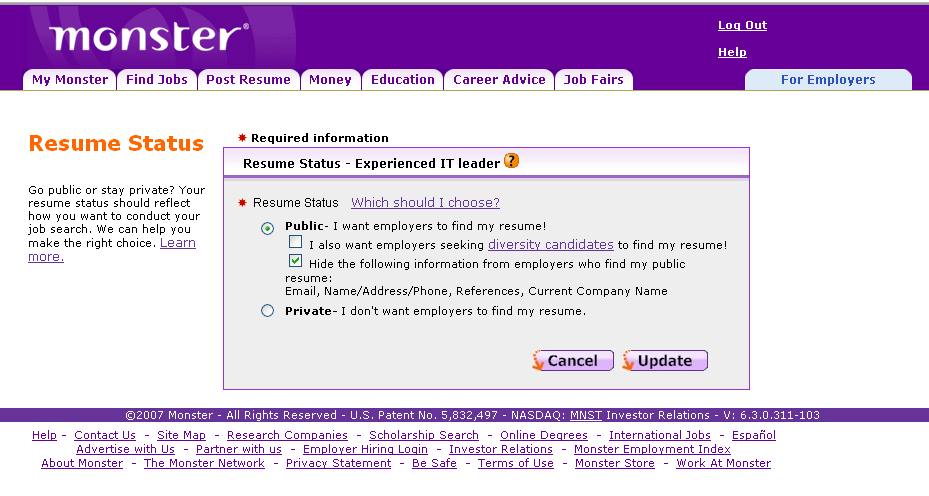
Important: If you choose to hide your contact information, current
company and references, you must ALSO remove this information from your
uploaded Word resume or Copy & Paste text resume.
Security precautions when evaluating job postings on Monster and job opportunities that you may receive unsolicited vian email.
You may encounter fraudulent job opportunities when searching for jobs
online, or you may receive fraudulent email that has had the sender's address
forged to make it appear as if it came from Monster. Such practices are a
violation of Monster's
Terms of Use and may be a criminal violation of federal and/or state law.
All online companies are susceptible to occasional scams. Here are some tips
from Monster.com to protect yourself!
Email Scams
We're all familiar with spam. But what about spoofing and phishing? Both terms refer to fraudulent emails that illegally collect personal information.
Resume Security
Posting your resume on Monster is an important part of your job search. We'll show you how to keep your resume safe, while allowing employers to find you.
Money-Laundering & Reshipping Scams
Someone from another country needs your help transferring funds. What seems like a lucrative job offer could cost you your savings and more.
Recognizing Business Opportunity Fraud
High pay. No experience necessary. Chances are you've seen job postings that seem too good to be true. We can help you spot the scams.
Protecting Personal Information
Sharing personal information with a potential employer may be reasonable. Controlling when, how, and to whom you release information is the key.
Avoiding Work-at-Home Scams
Working at home sounds great. You set your own hours and the commute can't be beat. But get the facts before you consider accepting an offer.
Network Safely Online
Making new contacts online can help with your job search and your career. Knowing what to share and when is the first step.Learn more about conducting a safe job search.
Other Jobs Scams
There are a variety of sleazy scams that look, at first glance, like legitimate job offers. Before you write back to them, pause a moment and read about the scams below!
Some of the more common job scams are